Apr 16th
Posted by shambo  as Culture, Family, Growing up, philosophy

Real Cowboy

Let me say this about that.

My dad was a cowboy.  Really, he was a cowboy.  But the range he rode, the cows he punched and his nighttime campfires out on the prairie, were all in his head.  He was a 19th century cowboy trapped in a 20th century laborer’s body.  His character, his personality and his outlook on life were all shaped by the ‘cowboy codes’ of the 1870′s, as they were described in the Zane Grey pulp fiction cowboy novels he constantly read.  Cowboys were strong, self-reliant, quiet-spoken, and tough men.  And this described my dad to a “tee”.

When I was five years old, we lived in a small house in southeastern Tennessee.  It was a rickety old place with intermittent heat, a leaky roof and a wood-fired cooking stove.  Dad kept a supply of wood under the house and would bring an arm-load to the kitchen whenever my mother started to prepare dinner.  One night dad went to fetch a load of wood, which generally required him to chop a few pieces of kindling with a hatchet.  After he had been gone for a few minutes, he called for my mother to come outside.  There she found my dad sitting on the ground with the hatchet buried 1/2 inch deep into his left shin.

“Eeeeyyyyaaaauuuggghhhhhh!!!!!!”

Mom had a scream like a banshee that terrified everyone within earshot and made even the slightest dilemma seem dire.  But this time she got it right.  Blood spurted from around the hatchet blade with a rhythm that coincided with Dad’s heartbeat.  This was not good.

“Eeeeyyyyaaaauuuggghhhhh!!!!!!”

“Honey, now calm down.  It’s nothing I can’t take care of.  Now bring me a towel.”

My mom managed a moment of sanity and fetched a small towel from the kitchen.  Dad calmly jerked the hatchet from his shin bone, wrapped the towel around the wound, secured it with duct tape and drove himself to the hospital.  And that, as they say, was “The Cowboy Way”.

We were a poor family.  It didn’t bother us much.  We had always been poor.  To be dissatisfied with poverty requires that you have some frame of reference, and since we had always been poor, we had none.  Sometimes ignorance really can be bliss.  The year after the ‘hatchet’ incident, we moved to a farm in Appalachia, but lost it soon after in the first of several bankruptcies.  How much of a concern was bankruptcy to a family living below the poverty level?  Hell, it was just another day.

The bank took the farm, but Dad was able to salvage a few hundred dollars from the sale of our small cotton and corn crop, a single cow, four pigs, a dozen chickens and a duck.  A nest egg to make a new start?  Not when your dad is a cowboy.

Dad decided we’d had enough bad news for a while and announced that we were going on a ‘Great Adventure’.  “We’re going out west“, he proclaimed, but did not make it clear if we were going forever, or just a vacation.  From the looks of the heel marks from my mom’s shoes as she was dragged to the car, it became clear that, at least she, was coming back.  Mom was not the ‘old west” type.  She was the serene, clean-sheet, warm-food, uneventful day type and wanted no part of Dad’s “Cowboy Way”.  But, against any standard of common sense, off we went.

I have many memories of that trip.  You can imagine a kid that had never traveled more than a couple hundred miles from his birthplace finding himself on a road trip of some 6,000 miles.  I had a blast – especially that time with the buffaloes.

It was on a lonely stretch of two-lane blacktop, somewhere near the Montana / Wyoming border, we spotted a buffalo roaming alone on the prairie – then a couple more – then dozens.  Real buffalo, just like in the books!!  We were thrilled.  A few miles further down the road, the seemingly random sighting was explained by a sign that said “Flying W Buffalo Ranch”.  Dad turned into the long driveway.  Mom was pissed.

We pulled up to what appeared to be the main house and Dad told us to sit tight and he would be right back.  A grizzled woman answered Dad’s knock at the door and he disappeared inside.  A half an hour later, you could see steam beginning to blow out of my mom’s ears.  She had seen this many times before.  My dad was completely void of any sense of time – especially when he was with a bunch of guys that actually lived “The Cowboy Way”.

“Son, go get your dad and bring him back to the car – RIGHT NOW!”, I was instructed.  I went to the front door but no one answered my knock.  I went around back of the house and heard several men shouting behind a group of small buildings and a corral, a hundred yards or so from the main house.  As I came closer, I could hear one man’s voice above the surrounding pandemonium shout “Slap the iron to ‘em John!” as my dad burned the ranch’s logo into the flank of the beast with a white-hot branding iron.

To make a long story short, we had just travelled 3,000 miles and sat in the car while my dad branded buffaloes.  Mom was not happy.

A round trip of some 6,000 miles with an unhappy wife, does not a fun trip make.  Dad decided to make up for his transgressions at the buffalo ranch by taking us to a rodeo in West Yellowstone, just outside the national park.  His heart was in the right place but Mom had about as much interest in rodeos as ‘Larry-the-Cable-Guy’ has in Italian opera.  But, she understood human imperfection and knew what she was getting into when she married the man – ‘for better or worse’ she often reminded him.  Plus, we were going to sleep in a motel that night, instead of sleeping in the car on the side of the road like we had for most of the trip.

I had never been to a rodeo and was as excited as a ferret on a double cappuccino as we climbed into the grandstands.  Bronc riding, calf roping, bulldogging, barrel racing – it was heaven, covered with a thick layer of dust.  I was beginning to warm up to this ‘cowboy’ thing and began to form visions of wearing a giant brass belt-buckle that read “World Champion Cowboy”.

Dad announced he was going for a beer and stood up to leave. “John, bring me and the boys a Coke when you come back.  It’s awfully dusty and we need something to drink.”  A half hour later, no beer, no Coke, no dad.  “Son, go find your dad and tell him to get back here – RIGHT NOW! 

Been here before.

I complained because the bull riding had already started and I wanted to see the most highly regarded and toughest cowboys in the most dangerous event of the rodeo.  But, you didn’t argue with a women with steam coming out of her ears, so I got up to leave.

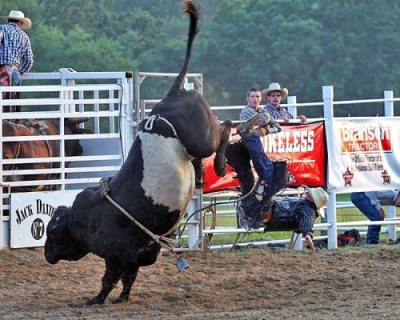
Just as I did, a voice came over the loud speaker and announced: “And now, coming out of chute number three, riding ‘Ol Blood and Guts’, from Oklahoma City, Oklahoma …… John Shambo!!!!”

“Eeeeyyyyaaaauuuggghhhhh!!!!!!”

And there he was.  Clinging for dear life on a deranged animal the size of a locomotive, bucking, kicking, and biting in an attempt to remove body parts from my dad.  Of the eight seconds required for a successful ride, Dad barely made it through the first one.  The second one was spent mostly in the air which preceeded a thud as he hit the ground.  Then the bad news.  The bull, in an attempt to show his disdain for the indignity my dad had put him through, charged with his head lowered.  One of the rodeo clowns rolled a barrel in front of the bull, which he proceeded to launch into suborbital flight – but it gave another two guys time to drag my dad from the field of battle.  To Mom, he looked dead.

“Eeeeyyyaaauuuggghhhhh!!!!!”

“Mom, calm down.  I’ll go get him.” 

Been here before.

I found him sitting on a bale of hay behind the corral getting a couple of stitches in his leg from a medic.  Another contestant – apparently a ‘lifelong friend’ my dad had just met – brought him a shirt to replace the one hanging in shreds from his bruised and bleeding shoulders.

“What did you think of my ride, Son?”

“Wow Dad, you’re a real cowboy.”

Until the day he died, I don’t think I ever paid him a higher compliment.

And, that’s all I have to say about that.

Shambo



Share
Mar 29th
Posted by shambo  as History, Military, Travel

The Inchon Move

Let me say this about that.

I have been interested in military history since I was a kid.  Later in life, my profession often required me to travel internationally, which also afforded me the opportunity to visit many of the great battle sites I had read about as a child.  However, visiting the site of a great military battle and ‘participating’ in one, are entirely different experiences.

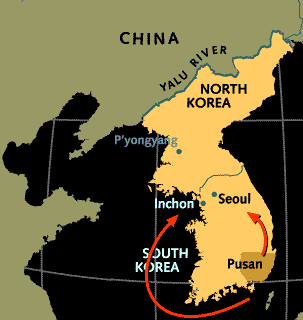
In the late 1980′s I was put in charge of five large manufacturing operations in Asia – one of which was in Seoul, South Korea.  During my visits to this plant I often took the opportunity to travel around the country to develop sources of supply and local partnerships.  Travelling from Seoul in the northernmost part of Korea, to Pusan in the southernmost part of the country, gave me ample opportunity to visit many Korean War battle sites.

One Saturday afternoon, with little to do until the following Monday, I decided to drive from my hotel in Seoul to the site of the ‘Battle of Inchon’, some 30 miles away.  For those of you who do not share my passion for military history, I will give you a thumbnail sketch of the significance of the ‘Battle of Inchon.’

In mid-1950, the U.S. Army had been driven completely out of North Korea – then South Korea, and were hanging on by a thread on the southern tip of the country in Pusan.  The vastly superior North Korean troops threatened to push the Americans into the sea until Gen. Douglas MacArthur devised an incredibly audacious plan.

MacArthur could see potential disaster in an all-out battle with the North Koreans, attacking his much smaller army with their backs to the sea.  Rather than surrender or attempt a risky Naval retreat while under fire, MacArthur decided to move some of his reserves off the peninsula, maneuver them 500 miles back north by boat, and attack Seoul from the Port of Inchon.  In short, he changed the battle scenario from the North Koreans attacking the Americans to their front – to – getting attacked by the Americans from their rear.  War correspondents called it “The Inchon Move” and it joined the lexicon of brilliant tactical maneuvers from American boardrooms to sporting events to poker tables.

I had no idea how to get to Inchon, and in those days, very few road signs were in English.  I asked the hotel manager for a map to the city of Inchon which he dutifully provided, albeit in Korean.  Confident that I could match the Korean characters on the map with the characters on the road signs, I rented a car and was on my way.

After about two hours it became obvious I had travelled a helluva lot further than thirty miles.  Another half hour convinced me that I was hopelessly lost.  The terrain was a mix of flat rice fields dispersed between steep, heavily forested mountains and was eerily devoid of people.  It was spooky quiet and I had only about an hour of daylight left.  I began thinking about having to spend the night in the car with no food, no water and no blankets against the subzero December temperatures.

I may have lost my concentration a bit as my little Kia struggled up a narrow mountain road while I attempted to read the map and drive at the same time.  As I topped a hill, there was a sharp left hand curve and a steep decline.  I wasn’t ready for it and my car began to swerve out of control.  As I struggled with the steering wheel, a much bigger problem came into view ….. a tank.

A tank  – a huge army tank was sitting square in the middle of the road and was about to be mounted by my little Kia.  I locked-up the brakes and went into a four-wheel slide, coming to rest sideways within a foot of the tank.  Instantly, a dozen uniformed soldiers surrounded my car with their rifles pointing at my nose and shouting at me in Korean.  Inchon is VERY close to the North Korean border and I surmised that if these were North Korean soldiers I may have accidentally crossed the border.  If so, I had well and truly screwed the pooch.

I carefully removed my hands from the death-grip I had on the steering wheel and placed them on the roof of the car.  This seemed to annoy the gentlemen with the rifles and their shouting became more intense.

What do you say to a dozen soldiers who are pointing their weapons at your head and shouting orders in a language you don’t understand?  At that moment, with my life flashing before me, I recalled a piece of advice my father had given me as a child: “Son, never pass up a chance to shut the f_ _k up.”  If there had ever come a time when this piece of advice was relevant, this was it.

Suddenly, over the cacophony of Korean shouts came a louder, more authoritative command – also in Korean, but with what sounded like a Southern American accent.  Apparently all the adrenaline coursing through my veins had made me delusional.  I was about to be shot by a North Korean commander with a Texas accent.

The soldiers backed away a step or two but kept their weapons pointed at my head.  Another sharp command by the mysterious voice and they backed away a few more steps and lowered their guns.  I was still sitting in the drivers seat, with my palms pressed firmly on the roof when a tall thin soldier dressed in an American uniform walked up to the drivers side window and said in a thick accent I had not heard since my last trip to Houston : “Sir, what in the hell are you doing here?”

It was a surreal moment.  Had the Texans joined forces with the North Koreans?  I froze.  I just sat there while my mind tried to process what was going on.

“Sir, please exit the vehicle”, the American sergeant ordered.

“I don’t think that is such a good idea, Sergeant” I replied.  “Your Korean buddies tend to get aggravated every time I move.”

I was fully prepared to sit in that Kia until doomsday before I did anything to provoke the guys with the guns.  Another piece of fatherly advice came to mind in my predicament: “Son, when you’re walking on eggs, don’t hop”.

The American sergeant barked another order and the Korean soldiers (South Korean soldiers, thankfully) dispersed and I got out of the car.  “Sir, what are you doing here?”  the sergeant repeated.  “Don’t you know where you are?”

“I have no idea”  I answered.  “But clearly, wherever it is, I’m not welcome.”

The sergeant pulled a map out of his fatigues and spread it out over the hood of the Kia.  He pointed to a small island in the most northwesterly corner of South Korea, where the Imjin River joins the Han River and flows into the Yellow Sea.  Here, the Imjin River IS the Demilitarized Zone (DMZ) between North and South Korea.  He nonchalantly pointed beyond the tank to a narrow river and said: “That’s the Imjin” without looking up from the map.  “You could throw a baseball into North Korea from here.”

The sergeant went on to explain that the previous night a small boat carrying six North Korean infiltrators had crossed the Imjin River and attempted to enter South Korea.  The infiltrators had been intercepted and a fire fight broke out that had ended around daylight that morning.  All six infiltrators were killed, along with two of the South Koreans under the sergeant’s command.

“You can forgive my boys if they’re a little jumpy.”

All I wanted was to get the hell out of that place, go back to my hotel and drink myself into a stupor.  The sergeant offered to escort me a few miles back to the main road that would take me to Seoul.  He instructed me to follow him in his jeep, but not to get closer that five car lengths, nor more than ten behind.  His reason for this instruction was soon to become obvious.

He instructed a Korean soldier to “mount” his jeep, which he did immediately, crawling into the back seat and loading a bazooka !!!!!  Again, my nose was the target of choice and what little inventory of adrenaline I had left rushed to my veins.  The jeep took off a lot faster than my underpowered Kia and I struggled to maintain the five to ten car lengths distance dictated by the sergeant.  Turns out that this distance is the perfect ranging for a 100% accurate shot from a bazooka.

I contemplated what a round from a bazooka would do to my head at that range, if the Korean soldier decided I was a threat.  I imagined it would have an effect similar to a water balloon dropped from a four story window onto concrete.

At a main intersection about five miles down the road, the jeep came to a stop.  I stopped the Kia exactly 7 1/2  car-lengths behind the jeep as the sergeant approached.  “Sir, just follow this road about 40 miles and it will eventually lead you back to Seoul.  Ya’ll have a nice day now, ya hear.”

“Have a nice day?”  How can you have a nice day after a near death experience, two cardiac arrests, and a lower digestive tract trying to make The Inchon Move on it’s own?  I really, really needed a drink.

At the hotel bar that night, as I proceeded to put the bar maid into a higher income tax bracket, I pondered how I would have handled actually being in the Battle of Inchon.  My little experience was trivial compared to the real thing, yet it was still terrifying.  What courage those guys fighting in MacArthur’s army must have had.

I have never looked at a battlefield the same way since.

And, that’s all I have to say about that.

Shambo


Share
Mar 11th
Posted by shambo  as Growing up, History, Relationships, Women

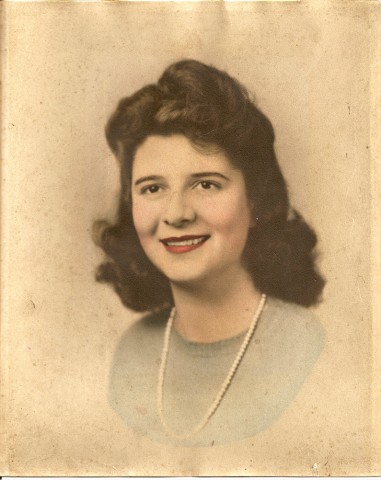
Genny - circa 1941

Let me say this about that.

Genny, as she was called by her parents Ed and Pearle, was born in 1923 in Buchanan, Virginia, in the foothills of the Appalachian Mountains.  While Ed was a muscular man, standing a few inches over 6 feet tall, Pearle was a short rotund woman whose world revolved around caring for Ed, Genny, her brother and two sisters.  Most of Genny’s childhood was spent during the ‘Great Depression’ in this backwater farming community where every waking moment was spent avoiding starvation.  There were no paying jobs available to anyone, so Pearle and the four kids spent most of their time tending the garden and canning what they grew there, as well as the fruit from their pear and apple trees.  Ed supplied wild meat with his shotgun and small fish pulled from the nearby James River.  It was a hard life, but manageable to anyone who was willing to work equally hard.

By the time Genny graduated from Buchanan High School, she had grown into a striking young woman, who had taken her statuesque build and dark hair from her father’s side of the family.  She probably could have had her pick of any available young male – had there been any around.  World War II was in full swing and most men were in Europe or the Pacific.  As most of the traditional labor pool was in uniform, women picked up the slack in factories around America, churning out equipment and weapons for the war effort.

Considering she was smart, easy on the eye, and had a work ethic born out of a depression-era Appalachian Mountain upbringing, she had little trouble finding work a couple of hundred miles up the road at the Martin Aircraft Company.  At Martin’s Middle River plant, Genny would bind up her raven locks in a kerchief, put on her leather gloves and build B-26 Marauder bombers, alongside a few thousand other ‘Rosie-the-Riveters’.

Genny – my Mom – and all those other women, defined the term ‘True Grit’.  She told me years later that the ladies were periodically marched from the assembly line to the tarmac to watch test pilots take one of the new Marauders up for a test flight.  She said the women would hold each other as the planes gathered speed down the runway, knowing that the life of the pilot was hanging on the quality of the work they had done a few days earlier.  “They didn’t all make it” she told me. When there was a crash, the women were sent back to the assembly line, even as the plane and it’s pilot were still burning at the end of the runway.  Due to a poor design, the pilots had nicknamed the B-26 the “Widow Maker” and plant-side crashes were not uncommon.  My Mom told me that some of the women would become delirious when told they would have to watch another test flight.  She and the other ladies would stand aside as a few men in uniform would escort the hysterical women out of the plant, never to be seen again.

I was in my twenties when Ed, my grandfather, told me a story that epitomizes the character of a woman who had survived such a calloused life.  In 1946, my Mom and Dad had moved back to Buchanan.  Ed had  found a job for my Dad in the local rock quarry where he operated a steam shovel.  One day my Mom was at home preparing lunch and had put me, her one-year old son, in a crib next to a window.  There was only two rooms in the second-story walk-up, and as air conditioning was unheard of, the window was open, although covered by a screen.  One-year old boys like to climb – and climb I did.  Out of the crib, and up onto the windowsill, I found myself blocked by the screen.  With only a modicum of pressure, I pushed out the screen and proceeded to fall twenty-five feet into a rose bush next to the house.

My Mom ran downstairs and gathered up her unconscious baby and headed to the village doctor’s house a half mile down the road.  Initially, it looked pretty bad so the doctor instructed a neighbor to fetch my Dad and Grandfather from the rock quarry.  When my Dad arrived, I was still unconscious and there was blood everywhere – spewing from the hundred cuts produced by the thorns on the rose bush.  As my Grandfather tells the story, my Dad entered the room and turned an odd shade of grey.  My Dad was a ‘real man’, with equal parts red-blood cells and testosterone pumping through his veins, but when he saw the shape I was in, he passed out and dropped to the floor like he had been hit in the back of the head with a tire iron.

When the blood was cleaned up, it was found I had no problems, save a few hundred scratches from the thorns.  My Dad, however, needed more medical attention than I did.  As for my Mom, she simply wrapped me up in a blanket, carried me back home and calmly continued making lunch for me and my still-woozy Dad.

She was a chunk of granite, covered with a satin exterior.

Life got no easier for Genny.  A few years later she was diagnosed with the most crippling type of rheumatoid arthritis.  As years passed, her condition deteriorated so badly that she was frequently hospitalized, sometimes for months at a time.  My Dad tried to keep up, but after a few years, we were abandoned by the insurance companies and we lost everything.  We moved into my Dad’s father’s house in Tennessee for a year, until we were able to rent half of a small duplex a few blocks away.

My dad was working three jobs and my younger brother and I both had jobs after school.  This left my Mom alone and bedridden most of the time.  She was able to get through the very rough patches with the help of the lady who lived in the other half of the duplex.  Sister Lucy was an eighty-something year old Catholic nun who was one of the purest souls I have ever met.  She had spent her life tending to the needs of her flock’s mind, body and soul and treated us the same way.  One day she presented my Mom with an 1830 edition of Sir Walter Scott’s Lady of the Lake.  Given that the book was published three decades before the Civil War, it was in rough shape, but meant a lot to my Mom, who treasured it as a symbol of the kindness of a fellow human being.

The following year, my Dad moved us into a small house, made affordable due to the undesirability of the neighborhood.  My kid brother and I even began to feel everything was finally beginning to work out for us.  That is until just two months after we moved in, a large truck pulled up in front of the house, accompanied by a police car.  We watched as a group of men loaded every possession we had into the truck.  As one of the men loaded my little brother’s bicycle into the truck, my Mom lost it.

It was as if every bad thing that had ever happened to her – every bad thing that she found the courage to survive – came crashing down on her.   She had lost the will to fight a never ending river of bad health, poverty and hopelessness.  My Dad fared no better and passed away a few years later.  That day, we ceased to be a family.

Mom ignored my constant pleas to move in with me and chose instead to reside in a government assisted living facility overlooking the Cape Fear River.  She said she did not want to be a burden and was terrified that her medical bills would force me into financial ruin as it had my Dad. For years I would secretly send her money in cash so as not to lose her eligibility for medical benefits.  With this money, she was able to afford the few simple comforts she allowed herself.

Her condition continued to degrade until one day I received a phone call that urged me to get to her bedside as soon as possible.  I arrived to find her in intensive care.  The doctors had exhausted all options for treatment and were trying just to make her comfortable.  She was dying and she knew it.  I sat on the edge of her bed, holding her hand for her last few minutes.  Then she looked at me and said something I had never heard her say.  Through all her physical pain; through all her misfortune; through the Great Depression and a World War; through all the poverty, disappointment, and heartbreak I never heard her say it.  She said “I’m scared”.    And, with that, she closed her eyes and crossed to the other side.

A few weeks later my brother and I  went to her quarters at the assisted living facility to gather her few possessions.  She didn’t have much - some pots and pans, a few photographs, a couple of books, and her clothes.  As we boxed her belongings, we noticed that a few dollar bills were falling out of some of the items.  A sauce pan contained two one-dollar bills.  One of her night gowns yielded three one-dollar bills.  On closer inspection, we found one dollar bills in pillow cases, under seat cushions, between the pages of books, in house slippers and under lamps.  This woman, even after half a century of destitution and hoplessness, was still saving for a rainy day.  Some of the money I had sent to make her life a little more comfortable was being saved so that she could leave her boys ‘a little something’.  My brother and I were the recepients of an inheritance of $23.

We  gave most of her belongs to charity but there was one thing I wanted to keep.  It was the copy of “Lady of the Lake” that Sister Lucy, the old Catholic nun had given her.  Soon after my mother’s death, I received an assignment to work in Asia.  I boxed up a lot of my belongs, including the book, and stored them away.  And that is where they stayed for most of the next twenty years.

Recently, my wife and I purchased a new house and we finally had enough room to unpack all of the belongings collected during our international travels and ex-patriot assignments.  We had amassed quite a collection of books since we both enjoyed reading and never threw away a book.  We converted one room in the new house to a library and had shelves built from floor to ceiling.  As we were unpacking the boxes of books, I ran across the old copy of the “Lady of the Lake”, which was in pretty good shape considering it had spent nearly a quarter century in a cardboard box.   I was telling my wife the story of how I came to own the book and was gingerly flipping through a few pages when a one dollar bill fell to the floor.

Twenty-three years after she passed away, this incredible woman who was my Mom, was still trying to provide for her son.

And, that’s all I have to say about that.

Shambo



Share
Mar 5th
Posted by shambo  as Culture, Growing up, Investing

Appalachia

Let me say this about that.

In 1957, I had just reached the age of twelve years and began to contemplate my future.  Or, as was the common expression in those days, “what was I to become when I grew up”.   Adult men in the deep south back then were defined by how they earned their living.  In the backwoods of the Appalachian mountains in the mid 50′s, farmer, trapper, blacksmith, and laborer were perfectly honorable professions and the vocation of choice for most of my schoolmates.

My parents were very poor and lightly educated; my father never graduating from high school.  Their history however, did little to deter them from pounding the ethic of hard work and education into the heads of my younger brother and me.  My father worked two jobs in the nearest town, some thirty miles away, and tended our small thirty acre farm during his rare time off.  In his absence, our mother took over working the farm with her staff of two pre-teen sons.

Hard work – seven days per week – did not pose any hardship on my family.  It was simply the price of not starving to death.  Studying hard in school, even the two hour round trip school bus ride, was no imposition either.  School work provided an escape from the daily grind of digging weeds from the vegetable garden, carrying buckets of water to the hog lot, clearing land of pine saplings to plant hay for our single cow, milking that cow and feeding the chickens.

When I entered junior high school, my mandated study routine became more than just a way to please my parents – it became a portal to another world I never knew existed.  My classmates in the 7th grade fought over the school library’s National Geographic magazines in order to get their first glimpse of a woman’s breasts from photographs of African girls.  I found them fascinating as well, but for me, there was so much more to experience.  I was mesmerized by… (more…)

Share
Sep 20th
Posted by shambo  as Cars, engineers, guys, Technology

Bored engineers - not good

Let me say this about that.

I was watching the “College Game Day”  program on TV last Saturday in preparation for a glorious day of holding down the couch and watching football.  During the preview of the Michigan State - Notre Dame game there was a segment that showed a group of students on the front lawn of a fraternity house on the Michigan State campus.  The fraternity had towed a junk car onto their lawn, painted it in Notre Dame colors and were encouraging the Spartan faithful to pound the hell out of the car with sledge hammers.

I think the car was a 1985  Nissan, which was made out of an alloy of pig iron and Kryptonite, and is basically indestructible.  Anyway, not much damage was done to the car, no Notre Dame fans fainted from shock, and the Michigan State fraternity guys came off looking like a bunch weenie-boys.  This effeminate display got me to thinking about college life for the current ‘politically correct’ generation and how much it has changed since I attended college.

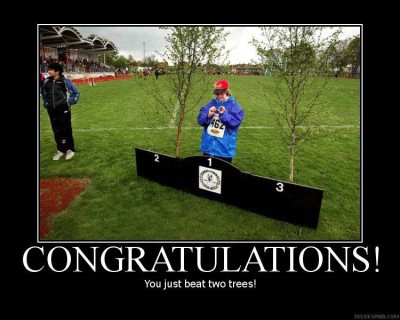
I went to college at one of the toughest engineering schools in the country.  Basically it was 4+ years of hell on earth.  I rarely got more than four hours of sleep a night, worked my butt off seven days a week, and felt lucky to carry a C+ to a B- average.  When a rare chance to have a little fun came along, we cut it loose like we had been given a ‘death row’ pardon.  The “beating the hell out of a car with a sledge hammer” on the Michigan State campus last weekend reminded me of a similar college prank when I was a sophomore – way back before the age of political correctness – back when college pranks could be lethal.

The year was 1965 and a fraternity had towed a 1952 Ford Victoria onto their front lawn, painted it with our football rival’s colors, and were charging a dime (remember 45 years ago a dime was real money) to smash the car with a 9-pound sledge hammer.  Great fun … for about ten minutes.  A crowd of fifty or so engineers standing around watching some guy slug an inanimate object with a hammer gets boring in a hurry.  So, someone in this gaggle of geeks decided to… (more…)

Share
Sep 13th
Posted by shambo  as Animals, Current Events, Food, Nascar

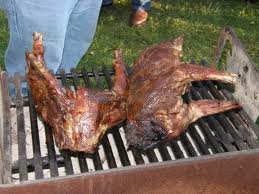
BBQ'd raccoon - mmmmmm

Let me say this about that.

Every so often, we hear a story that shakes our confidence that man is really at the top of the food chain.  There was the recent news coverage of the lady in the Florida Keys who caused an accident while driving down the highway as she shaved her “coochie”.  But hell, everyone living in the Keys is a little off-center.  Then, there was the bill introduced into the Florida legislature last year that would make it unlawful for humans to have sex with  alligators, but aren’t all politicians busy with crucial legislation such as this?

But now, we are confronted by the startling revelation that all NASCAR fans may not be candidates for membership in MENSA.  Shocking really, as NASCAR fans paint themselves as the prototype for ‘real Americans.’  But if this latest story is true, I’m afraid that we all might have to start taking banjo lessons.

Shortly after the completion of this years NASCAR race in Bristol, Tennessee, a 27 year old race fan was arrested for ‘streaking’  through a convenience store parking lot. First of all, this incident proves that NASCAR fans are about thirty years behind the latest fad.  ‘Streaking’ was abandoned by most of the civilized world back in the 70′s, but one explanation might be that this young man lived in West Virginia.

And, yes, there was alcohol involved which added a charge of “public drunkenness” to “indecent exposure”.  Much of this might have been written off as the bad judgement of youth, but then things got really weird.  Waiting in the car for the young man to complete a couple of nude victory laps around the convenience store parking lot, was his girlfriend – and…    (more…)

Share
Sep 8th
Posted by shambo  as Airlines, Culture, Government, Language, Sex, Weird

Let me say this about that.

Human beings are a funny lot.  We seem to think we understand the world we live in quite clearly.  However, as I have aged, I am beginning to see that I don’t ‘really’ understand a helluva lot.  Allow me to illustrate.

How do you make a question mark in Chinese? One must presume that the billion or so Chinese people in the world occasionally ask a question.  Sometimes they probably even reduce their question to writing.  How are they able to tell the difference between the same phrase (one expressed as a question and one expressed as a statement) – without a Chinese question mark?  For example …. “You need fortune cookie” (a statement extolling the virtues of the possession of a fortune cookie) – versus - “You need fortune cookie?” (a question concerning your desire to possess a fortune cookie).  Hell for that matter, when is the last time you saw quotation marks in Chinese.  Hmmmm.

How did dinosaurs mate? Unless you are a believer in the literal interpretation of the Old Testament, the beginnings of life on this planet become a bigger mystery with every new paleontological discovery.  For example, dinosaurs roamed the earth for over 180 million years.  That’s 10 times longer than the number of years the human race has lived here.  One has to assume that dinosaurs were a hearty breed, capable of overcoming all sorts of challenges to procreate and thrive.  But, I have never heard a explanation of how dinosaurs mated.  You know they had to “do it” to be able to make little dinosaurs for 180 million years.  But how would (for example) a male ‘Argentinosarus’, that was 120 feet long from head-to-tail, and weighing in at 200,000 pounds, go about mounting a female?  I mean, just getting past her…    (more…)

Share
Aug 16th
Posted by shambo  as Communication, Government, Politics, Sex, Television

Barbie: "Got meat?"

Let me say this about that.

Just let me get this out.  I am sick to death of turning on the TV and instantly seeing Barack Obama blathering on about some new miracle he is going to perform for the American people.  This guy spends more time on television than the ‘OxyClean’ pitchman or that other annoying asshole …. “my name is Doug and I have mesothelioma.” Obama has spent his entire first term in the White House actively campaigning for a second term – or – going on vacation.  Well I’ve had it.  I’ve turned off the TV and have taken up web-surfing as my primary method of wasting time.

As it turns out, web surfing can produce a treasure trove of interesting stuff – especially if you are a serious player of ‘Trivial Pursuit’. For example, the national debt has been getting a lot of coverage lately.  Did you know that in 1789, the entire national debt of these United States was a paltry $190,000?  Today, the average household debt (for just one family) is $118,000 !!!  As for the current national debt, fahgetaboutit  …… it’s somewhere north of a gazillion billion quadrillion dollars.

Oh, here’s an interesting fact.  It seems that 80% of all the past winners of the ‘Publisher’s Clearing House’ $10 million give-away, did not buy any magazines.  Is that cool, or what?  Makes you wonder why they do it.

There are a lot of interesting facts concerning languages.  It is a little known fact that the shortest complete sentence in the English language is ………….    (more…)

Share
Aug 8th
Posted by shambo  as Current Events, Golf, Wives, Women

Let me say this about that.

I must admit that I am not a particularly religious guy.  To me, organized religion seems to be all about forcing narrow, single-minded dogma down our throats.  Organized religion always takes the position that their particular credo is correct, and all other beliefs are corrupt.  But one thing they all have in common is the belief in a “Higher Power”. Lack of any physical evidence of this “Higher Power” does not seem to deter the believers of any organized religion, although it is one of the many things that keep me from ‘signing-up’.

That is until this past Sunday when I had an experience that convinced me of the existence of a “Higher Power”. How, I reasoned, could an event such as this take place without the intervention of a ‘Supreme Being’? How could such a series of seemingly unrelated occurrences align themselves perfectly to provide an outcome so sublimely ethereal without the guidance of a Grand Master?

Let me explain.

Everyone on the planet is familiar with the saga of Tiger Woods.  Woods is – or was – one of the premier golf talents in the world.  As it turns out, he is also one of the world’s great liars.  He has replaced Bill Clinton as the preeminent narcissist in America.  As for temperament, it has been said that if there were a personality contest between Tiger Woods and a ‘Pet Rock’,   (more…)

Share
Aug 1st


Congress 'misspeaking'

Let me say this about that.

Like most Americans I have been watching the “Great Monkey Grab-Ass Show” performed by our nation’s leaders in Washington, as they negotiate a settlement to the current debt/budget crisis.  To give you guys a summary of what has been happening (just in case you actually have a life and don’t waste much of it watching a collection of our best ‘village idiots’ take a big crap on our great nation), just imagine this ………  A lit stick of dynamite (our economy) is being tossed back and forth between two drunk monkeys (the Democratic leadership and the Republican leadership), while a third drunk monkey (the Tea Party) is squirting mace into the eyes of the other two drunk monkeys.

OK, I might be dressing it up a bit to make it more rational than it really is, but you get the idea. The monkeys show no concern about the inevitable explosion of the dynamite – just as long as it explodes in the hands of the other monkey. The third monkey shows no concern about the inevitable explosion of the dynamite, because he knows it’s going to go ‘KA-BOOM’ and he is going to get none of the blame.  COOL !!!

Anyway, the nation’s press expressed this dilemma in this morning’s newspaper with headlines that read:

“Nation’s Leaders Reach Loggerheads Over Budget Crisis.”

Now I have a question – what the hell does that mean?

There are 535 people serving in the Congress that have been negotiating for over a year to stave-off the impending economic doom of the United States of America, and the net result of over 500 man-years of work is that they have succeeded in reaching “Loggerheads”.

OK, another question: “When is the last time you used the word ‘loggerhead’ in a conversation with one of your buddies?

“That’s right Fred, Martha and me drove on past Peoria about half a day ’til we reached ‘Loggerheads’.

Our good public servants in Washington do not speak English like you and I.  They speak a language so obscure that they could speak for an hour without actually   (more…)

Share

Copyright 2012 - 2009 LetMeSayThisAboutThat.com, All Rights Reserved - Powered By Wordpress || Designed By Ridgey